When the Market Crumbles: How I Clamped Down on Costs and Stayed in the Game
Losses hit hard—suddenly, my portfolio was bleeding, and panic crept in. But I didn’t flee. Instead, I shifted focus: not on chasing returns, but on controlling what I could—costs. What I discovered wasn’t flashy, but it worked. By tightening expense leaks, redefining risk, and rebuilding discipline, I turned survival into strategy. This is how I navigated the downturn, not with magic formulas, but with real, tested cost control moves that kept me in the game. It wasn’t about timing the market or predicting the next rebound. It was about mastering the elements within reach—fees, taxes, behavior, and structure—so when the storm passed, I wasn’t just surviving. I was positioned to grow.
The Wake-Up Call: When My Investments Started Losing Value
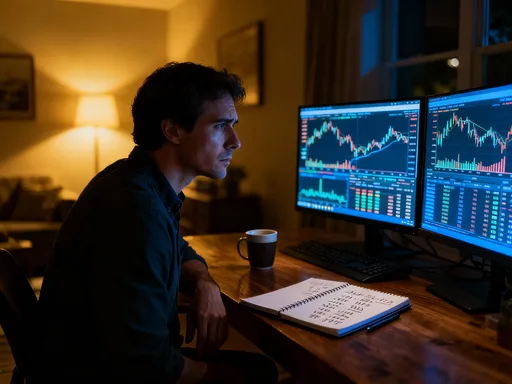
It began with a series of sharp corrections. One morning, I opened my investment app and saw a 15% drop in my portfolio value over just three weeks. The decline wasn’t isolated—it cut across sectors, from technology to consumer goods. I had built my strategy around steady long-term growth, relying on diversified ETFs and dividend-paying stocks. But I hadn’t prepared for the emotional toll of watching hard-earned gains disappear. The numbers on the screen didn’t just represent money—they reflected years of budgeting, saving, and careful planning. Each red arrow felt personal.
What made it worse was the sense of helplessness. I couldn’t control the broader economy, corporate earnings, or geopolitical tensions. I could only react. And my initial reaction was fear. I started checking my accounts multiple times a day, searching financial news for reassurance. I even considered selling some holdings to “cut my losses,” a move that would have locked in losses and likely caused me to miss the eventual recovery. That impulse revealed a deeper flaw: I had focused so much on selecting the right investments that I neglected the foundation of sustainable wealth—cost control and emotional discipline.
This moment became my wake-up call. I realized that during market downturns, the most powerful strategies aren’t about picking winners. They’re about minimizing damage, preserving capital, and avoiding self-inflicted mistakes. I shifted my mindset from growth-at-all-costs to resilience-first investing. Instead of asking, “What should I buy now?” I began asking, “What am I paying for, and do I need to pay it?” That simple change in focus marked the beginning of a more sustainable, grounded approach to managing my finances through uncertainty.
Why Cost Control Matters More Than Returns During a Crash
When markets fall, the instinct for many investors is to chase returns—switching funds, timing exits, or jumping into speculative assets promising quick rebounds. But history shows that such moves often backfire. During periods of volatility, the most effective strategy isn’t about earning more; it’s about losing less. And one of the most reliable ways to lose less is by controlling costs. Every dollar saved on fees, taxes, or unnecessary trades is a dollar that remains in your portfolio, compounding over time. Unlike returns, which are uncertain and influenced by external forces, costs are within your control.
Consider two hypothetical investors, both starting with $100,000 and earning an average annual return of 6% before costs. Investor A pays 1.5% annually in fees—advisory charges, fund expenses, and trading costs. Investor B, who is cost-conscious, pays only 0.5%. After 20 years, Investor A’s portfolio grows to about $265,000. Investor B’s? Over $320,000—a difference of more than $55,000, all from a 1% difference in annual costs. Now imagine this during a downturn: both portfolios decline, but Investor B’s lower cost base means less erosion and a smaller gap to recover when the market rebounds.
The math is clear: reducing costs enhances resilience. In a crisis, preserving capital becomes the primary goal. A high-cost portfolio requires higher returns just to break even, making recovery harder. By contrast, a low-cost structure acts as a buffer, reducing the drag on performance and giving you more flexibility to stay the course. This doesn’t mean avoiding risk altogether—it means managing it intelligently. Cost control isn’t a glamorous strategy, but it’s one of the few levers you can pull with confidence, regardless of market conditions. It turns passive endurance into active strategy, ensuring that when the market recovers, you’re not just back to where you started—you’re ahead.
Cutting the Hidden Fees That Drain Your Portfolio
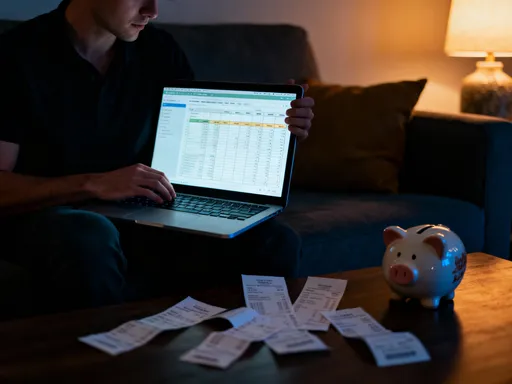
One of the first steps I took was conducting a full audit of my investment accounts. I gathered statements from my brokerage, retirement plans, and advisory services and began examining every line item. What I found surprised me. My mutual funds carried expense ratios ranging from 0.8% to 1.2%—not outrageous by historical standards, but significant over time. My advisory firm charged a 1% management fee, and I was making frequent trades, each incurring small but recurring commissions. Individually, these costs seemed negligible. But collectively, they were siphoning off a meaningful portion of my returns.
Hidden fees are especially dangerous because they operate silently. You don’t get a bill for them; they’re simply deducted from your account balance or embedded in fund prices. The impact compounds: a 1% annual fee reduces your effective return, which in turn reduces the base on which future growth occurs. Over decades, this can result in hundreds of thousands of dollars in lost wealth. The good news is that many of these fees are negotiable or avoidable. My first move was switching from actively managed mutual funds to low-cost index funds. Many broad-market index funds now charge less than 0.10% annually—less than one-tenth of what I was paying.
I also reviewed my advisory relationship. Instead of accepting the standard fee, I asked whether a lower-cost tier was available or if fees could be adjusted based on account size. Some firms offer discounted rates for long-term clients or those with larger balances. In my case, I was able to negotiate a reduction to 0.75%, and I set a goal to further reduce advisory involvement by taking more control of my own asset allocation. I also minimized trading activity, recognizing that each transaction—no matter how small—adds up in both direct costs and tax implications. By focusing on low-turnover strategies and holding investments longer, I reduced both fees and behavioral risk.
Another overlooked cost is account maintenance fees. Some brokerages charge inactivity fees, transfer fees, or fees for paper statements. I switched to a provider with no-fee accounts and opted for digital statements. I also consolidated smaller accounts to reduce administrative complexity and potential fees. These changes didn’t require a complete overhaul of my strategy, but they significantly improved my cost efficiency. The result was a leaner, more transparent portfolio—one where I knew exactly what I was paying for and why.
Tax Efficiency: Keeping More of What You Don’t Lose
During a market downturn, tax planning becomes even more valuable. When your portfolio declines, the last thing you want is to hand over unnecessary tax payments. Yet many investors overlook how tax decisions can either amplify losses or mitigate them. I learned this the hard way in an earlier bear market when I sold a losing position without considering the tax implications. I later realized I could have used that loss to offset capital gains elsewhere in my portfolio, reducing my tax bill. That missed opportunity cost me hundreds of dollars—money that could have stayed invested.
That experience led me to adopt tax-loss harvesting, a legal and widely used strategy that allows investors to sell underperforming assets at a loss and use those losses to offset taxable gains. If losses exceed gains, up to $3,000 can be used to reduce ordinary income each year, with additional losses carried forward to future years. This doesn’t reverse the market loss, but it softens the financial blow by reducing tax liability. The key is to follow IRS rules, such as avoiding the “wash sale” rule, which disallows the deduction if you repurchase the same or substantially identical security within 30 days before or after the sale.
I now integrate tax-loss harvesting into my annual review process. When I identify a holding that’s down and no longer fits my long-term strategy, I consider selling it not just for portfolio reasons, but for tax benefits. I reinvest the proceeds in a similar but not identical asset to maintain market exposure while complying with regulations. For example, if I sell a U.S. large-cap fund, I might reinvest in another fund with a different index or management style. This allows me to preserve diversification while capturing the tax advantage.
Another critical aspect of tax efficiency is account placement. Not all investments are equally tax-efficient, and where you hold them matters. For instance, bonds and dividend-paying stocks generate regular taxable income, making them better suited for tax-advantaged accounts like IRAs or 401(k)s. By contrast, growth-oriented stocks held in taxable accounts can benefit from lower long-term capital gains rates if held for more than a year. I restructured my holdings accordingly, placing higher-yielding, less tax-efficient assets in retirement accounts and reserving taxable accounts for long-term growth investments. This simple reorganization reduced my annual tax drag and improved my net returns, even in years when the market was flat or negative.
Rebalancing Without Overtrading: A Low-Cost Discipline
Rebalancing is essential to maintaining your target asset allocation, but it can become a costly habit if done too frequently or emotionally. In the past, I would rebalance impulsively—selling winners after a run-up or buying beaten-down sectors in panic. These moves often led to buying high and selling low, the opposite of sound investing. I also incurred unnecessary trading fees and triggered taxable events, eroding my returns further. I realized I needed a more disciplined, low-cost approach to rebalancing—one based on rules, not reactions.
My current strategy uses threshold-based rebalancing. Instead of adjusting my portfolio quarterly or annually regardless of market movement, I set a band—typically 5% above or below my target allocation—for each asset class. For example, if my target is 60% stocks and 40% bonds, I only rebalance when stocks move above 65% or below 55%. This reduces trading frequency and minimizes transaction costs. It also prevents overreaction to short-term volatility, allowing my portfolio to breathe within a reasonable range.
I also use dividends and new contributions as tools for rebalancing. Instead of automatically reinvesting dividends into the same fund, I redirect them to underweight asset classes. If bonds are below target, I reinvest dividends into a bond fund. Similarly, when I add new money to my accounts, I allocate it to the areas that need boosting. This method rebalances my portfolio without triggering sales, avoiding capital gains taxes and trading fees. It’s a subtle but powerful shift—from reactive trading to proactive allocation.
Another benefit of this approach is behavioral. By removing emotion from the process, I avoid the temptation to time the market or chase performance. I treat rebalancing not as a prediction of where markets are headed, but as a maintenance task—like tuning a car engine. It keeps the system running smoothly without overcomplicating it. Over time, this disciplined, low-cost rebalancing has helped me stay aligned with my long-term goals while reducing unnecessary expenses and tax consequences.
Behavioral Cost Control: The Price of Panic and Hype
Perhaps the most expensive costs in investing aren’t the ones listed on a fee schedule—they’re the ones we impose on ourselves through poor decisions. I’ve paid dearly for panic, overconfidence, and impulsive reactions. Once, during a market dip, I sold a portion of my stock holdings out of fear. Within six months, the market recovered, and I missed most of the rebound. That single decision cost me thousands in unrealized gains. I didn’t lose money to fees or taxes—I lost it to behavior.
Behavioral costs are invisible but powerful. Selling low, buying high, chasing trends, or abandoning a strategy mid-crisis all erode wealth over time. The financial industry often focuses on products and performance, but research consistently shows that investor behavior is one of the largest determinants of long-term success. DALBAR studies, for example, have found that the average investor underperforms market indices by several percentage points annually, largely due to poor timing and emotional decision-making.
To combat this, I built systems to slow down my decisions. I implemented a mandatory 72-hour waiting period before making any significant trade. This simple rule has prevented me from acting on impulse during market swings. I also started keeping a decision journal, where I record the rationale behind every major investment move. Before selling or buying, I write down my reasoning, expected outcome, and risk factors. Later, I review these entries to assess whether my decisions were sound. This practice has increased my self-awareness and reduced regret.
I also defined my investment philosophy in writing—a personal mandate that outlines my goals, risk tolerance, and strategy. When emotions run high, I revisit this document to ground myself. It reminds me that volatility is normal, that downturns are part of the cycle, and that my plan is designed for the long term. By treating investing as a disciplined practice rather than a series of bets, I’ve reduced the behavioral tax on my portfolio. The result? Fewer costly mistakes, greater peace of mind, and better long-term outcomes.
Building a Resilient Strategy: Cost Control as a Long-Term Advantage
When the market stabilized, I didn’t revert to my old habits. Instead, I embedded cost control into the core of my investment strategy. What began as a crisis response became a permanent discipline. I now evaluate every financial decision through the lens of cost efficiency—whether it’s choosing a fund, selecting an advisor, or planning a trade. This mindset has transformed my approach from reactive to proactive, from emotional to structured.
Cost control isn’t about cutting corners or avoiding risk. It’s about maximizing value. Every dollar saved on fees is a dollar working for me. Every tax-efficient decision compounds over time. Every avoided emotional trade preserves capital. These small advantages accumulate silently but powerfully, creating a performance edge that doesn’t depend on market timing or luck. Over decades, this edge can mean the difference between financial stress and financial security.
I’ve also become more intentional about financial education. I read prospectuses, review fee disclosures, and stay informed about changes in tax law. I no longer assume that professionals have my best interests at heart—I verify, question, and negotiate. This vigilance has paid off in lower costs and greater confidence in my decisions.
Most importantly, I’ve learned that staying in the game is the first rule of wealth building. Markets will fall. Crises will come. But by controlling what I can—costs, behavior, and structure—I’ve built a strategy that can weather uncertainty. I don’t need to be the smartest investor. I just need to be disciplined, informed, and resilient. And in the long run, that’s enough to win.