What I Found Driving Solo to Uluru’s Hidden Commercial Spots
Driving to Uluru wasn’t just about the red rock—it was the unexpected stops along the way that blew me away. Between the vast outback and the silence of the desert, I stumbled upon small but vibrant commercial hubs that most travelers miss. These aren’t tourist traps; they’re real, lived-in spaces where culture, food, and local life thrive. If you're planning a self-drive trip, you gotta know where to look. What I discovered wasn’t just convenience—it was connection. From roadside art stalls to thoughtfully designed towns, these commercial spots offer more than supplies. They offer insight into how people live, work, and sustain culture in one of Australia’s most remote regions. This journey became as meaningful as the destination itself.
The Decision to Drive: Why I Chose the Open Road to Uluru
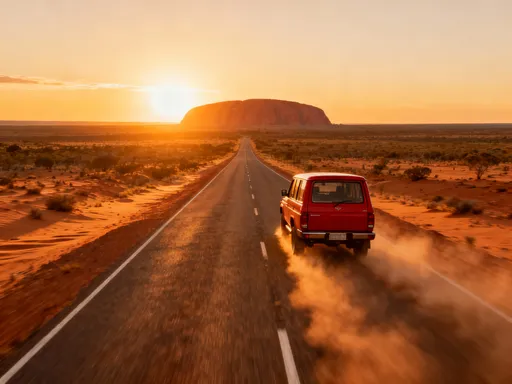
Choosing to drive to Uluru was not a decision made lightly, but it was one rooted in a deep desire for presence. Flying would have delivered me quickly to the red heart of Australia, but it would have skipped the very essence of the experience—the transition from the familiar to the extraordinary. By taking the wheel in Alice Springs, I committed to feeling the land change beneath me. The city, nestled in the MacDonnell Ranges, serves as the traditional gateway to Central Australia. From there, the Stuart Highway stretches southward, a ribbon of asphalt cutting through ancient terrain. But heading west on the Lasseter Highway toward Uluru is where the real transformation begins.
My vehicle was a well-maintained four-wheel drive, stocked with extra water, a detailed map, a satellite communicator, and shaded window covers to manage the heat. Preparation was key—not because the route is dangerous, but because self-reliance is the unwritten rule of the outback. There are no convenience stores every few kilometers, no quick detours for forgotten items. Every decision matters. I set out early in the morning, just after sunrise, when the air still held a hint of coolness. That timing wasn’t just about comfort; it was about respect for the environment. The desert demands mindfulness.
What surprised me most was how driving altered my perception of distance. On a map, the 450-kilometer journey from Alice Springs to Uluru looks manageable. Behind the wheel, it unfolds with a rhythm all its own. Each kilometer brings subtle shifts—the color of the soil, the shape of the spinifex grass, the way shadows stretch across the plains. Time slows. The horizon seems to breathe. This isn’t just transportation; it’s immersion. And in that immersion, I began to notice the first signs of human presence beyond the towns—a signpost, a fuel gauge reading, a small cluster of buildings where the land otherwise appears untouched.
First Signs of Life: Early Commercial Stops Outside Alice Springs
Within minutes of leaving Alice Springs, the landscape began to open up. The town’s outskirts gave way to red dirt roads and sparse vegetation, but not before I passed a series of small, unassuming commercial stops that serve both locals and travelers. These aren’t large shopping centers or corporate chains—they’re modest, family-run operations that reflect the resilience of outback life. One of the first I noticed was a roadside kiosk run by an Aboriginal family, offering cold drinks, pre-packaged snacks, and hand-labeled bottles of native spices. Wattleseed, lemon myrtle, and bush tomato were among the offerings, each with a small card explaining its traditional use and flavor profile.
What struck me was the care in presentation. This wasn’t mass-produced tourism merchandise. The jars were hand-filled, the labels handwritten, and the owner took time to explain how certain spices are used in traditional cooking. She spoke softly but with pride, emphasizing that these ingredients have been part of her people’s diet for thousands of years. I purchased a small bottle of smoked salt infused with native herbs, not just as a souvenir, but as a connection to the land and its knowledge systems. These early stops, though simple, set a tone for the journey—one of authenticity over convenience.
Further along, near the turnoff to the West MacDonnell National Park, I passed a combined fuel station and café operated by a long-time resident couple. Their business had been there for over two decades, serving as a vital pit stop for campers, road workers, and tourists. The café menu was limited—mainly sandwiches, coffee, and homemade Anzac biscuits—but everything was freshly made. The walls were decorated with local art, much of it for sale through a small cooperative arrangement. I chatted briefly with the owner, who told me how they source ingredients from nearby communities whenever possible. These early commercial nodes aren’t just about survival in a remote region—they’re about sustaining culture, economy, and hospitality in a place where isolation could easily lead to disconnection.
The Long Stretch: Surviving the 4.5-Hour Drive with Smart Pit Stops
The middle section of the drive from Alice Springs to Uluru is where the outback reveals its true scale. For hours, the road stretches straight ahead, flanked by flat plains and distant mesas. The sky is enormous, the silence profound. This part of the journey requires planning, not because of danger, but because services are spaced far apart. Fuel availability, in particular, must be managed carefully. The last reliable station before Yulara is at Erldunda, roughly halfway, which makes it a critical waypoint. I made it a rule to refill there, even if my tank wasn’t empty—better safe than stranded.
Along the way, government-maintained rest areas provide basic but essential facilities. These are not luxurious—usually just shaded picnic tables, clean toilets, and information boards about local wildlife and road conditions. But they serve an important purpose: they encourage drivers to pause, stretch, and reassess. Heat fatigue is real, and the monotony of the road can dull alertness. Taking a 15-minute break every two hours made a noticeable difference in my focus and comfort. I also kept a cooler with chilled water and electrolyte drinks, replenishing fluids regularly even when I didn’t feel thirsty.
Timing was another crucial factor. I avoided driving during the peak heat of the day, which in summer can exceed 40°C (104°F). Instead, I aimed to travel in the early morning or late afternoon, when temperatures were more manageable and the light was softer. This not only improved safety but also enhanced the experience. The golden hours transformed the landscape—red earth glowing, shadows elongating, birds circling on thermals. It was during one of these stretches that I spotted a small roadside stall selling cold water and Aboriginal paintings. The artist, an elder from a nearby community, sat under a canvas awning, painting quietly. I bought a small piece, a depiction of ancestral tracks across the land, and we exchanged a few words about the meaning behind the symbols. These moments, made possible by careful pacing, turned a long drive into a journey of discovery.
Yulara: The Planned Town That Serves Uluru’s Visitors
As Uluru came into view—first as a distant rise on the horizon, then as a towering monolith against the sky—I approached Yulara, the purpose-built resort town that supports tourism in the region. Unlike spontaneous settlements, Yulara was carefully designed in the 1980s to consolidate visitor services and minimize environmental impact on Uluru-Kata Tjuta National Park. It’s a model of functional planning: clean, efficient, and respectful of its surroundings. The town is compact, with a central hub that houses a supermarket, fuel station, post office, medical clinic, and multiple tour operators.
The supermarket, while smaller than city equivalents, stocks a surprisingly wide range of goods—fresh produce, dairy, snacks, and even specialty items like gluten-free bread and baby formula. Prices are slightly higher than urban centers, reflecting transport costs, but they’re fair and transparent. I appreciated being able to stock up on essentials without having to return to Alice Springs. The town also features several casual eateries, from coffee shops to family-friendly restaurants, many of which incorporate native ingredients into their menus. One café even offered a bush tucker tasting plate, featuring emu sausage, quandong jam, and wattleseed damper.
Accommodation options in Yulara range from luxury hotels to caravan parks, all adhering to strict environmental guidelines. Lighting is designed to reduce skyglow, waste is carefully managed, and water conservation is a priority. What impressed me most was the absence of clutter—no billboards, no loud signage, no visual noise. The architecture blends with the landscape, using earthy tones and low profiles. Yulara doesn’t try to impress; it aims to serve. And in doing so, it allows Uluru to remain the true focus. This balance between utility and restraint is what makes Yulara not just a commercial zone, but a thoughtful extension of the cultural and environmental values of the area.
Beyond Souvenirs: Where to Find Authentic Local Goods
In a place as iconic as Uluru, it’s easy to fall into the trap of generic souvenirs—keychains, magnets, mass-produced boomerangs made overseas. But for those who look closely, there are opportunities to purchase authentic, ethically made Aboriginal art and crafts. The key is knowing where to go. Within Yulara, the Cultural Centre and several designated art outlets offer direct access to works created by local Anangu artists. One of the most respected is Maruku Arts, a cooperative owned and operated by Aboriginal artists from the Central and Western Desert regions.
Maruku Arts is not a gallery in the traditional sense. It’s a living space where art is made, shared, and sold with integrity. The pieces—ranging from intricate dot paintings on canvas to carved wooden punu and hand-painted didgeridoos—are accompanied by certificates of authenticity and artist bios. Many works tell Tjukurpa (Dreaming) stories, passed down through generations. I spent nearly an hour there, listening to a guide explain the symbolism in a painting of the Mala (hare-wallaby) ancestors. The colors, patterns, and placement all carried meaning. Purchasing a small wooden sculpture felt meaningful, not transactional.
Supporting these cooperatives matters. When tourists buy directly from Aboriginal-owned enterprises, the economic benefits stay within the community. This contrasts sharply with souvenir shops that sell imported imitations, often misrepresenting sacred symbols. I made it a point to avoid such outlets, not just out of principle, but because the authentic pieces have a depth that replicas can’t match. The texture of the wood, the precision of the paint, the quiet pride of the artists—these are the things you can’t fake. By choosing ethically, visitors help preserve cultural heritage and empower local economies in a sustainable way.
Eating in the Outback: From Roadhouse Meals to Cultural Cuisine
Dining in the Uluru region might not offer the variety of a major city, but it delivers something more valuable: authenticity. Along the drive, I encountered several roadhouses—simple fuel stations with attached cafés—that serve hearty, no-frills meals. One, located near the border of the national park, offered a daily special of kangaroo stew with damper bread. The stew was rich and slightly gamey, slow-cooked with native thyme and served with a side of roasted vegetables. The damper, baked in a camp oven, was warm and slightly smoky, perfect with butter and honey. It wasn’t gourmet, but it was deeply satisfying—a meal born of the land and its traditions.
In Yulara, dining options become more refined without losing their connection to place. One evening, I dined at a resort restaurant that featured a modern Australian menu with strong Indigenous influences. I ordered the barramundi with lemon myrtle sauce and a side of bush tomato chutney. The flavors were bold yet balanced—earthy, citrusy, slightly sweet. The chef, whom I spoke with briefly, emphasized that many ingredients are sourced from local suppliers or foraged responsibly. Even the dessert—a wattleseed crème brûlée—carried a sense of place, with the nutty, coffee-like flavor of wattleseed adding a uniquely Australian twist.
Prices in these restaurants are moderate to high, reflecting the cost of transporting goods to a remote location. A main course might range from AUD 30 to 50, but the value lies in the experience and the ethics behind the plate. Knowing that my meal supported local producers and respected cultural traditions made it worth every dollar. And beyond the resorts, smaller eateries offer more casual options—think pies with emu filling, smoothies with Kakadu plum, or flat whites made with locally roasted beans. Eating here isn’t just about sustenance; it’s a way to engage with the culture, one bite at a time.
The Bigger Picture: How These Commercial Zones Support Sustainable Tourism
At first glance, the commercial spots along the road to Uluru might seem like mere conveniences—places to refuel, eat, or buy a postcard. But when viewed together, they form a network that plays a vital role in sustainable tourism. These zones are not just economic engines; they are guardians of balance. By providing legal, well-managed services, they reduce the incentive for unauthorized camping, littering, or off-road driving, all of which can damage fragile desert ecosystems. When visitors have access to clean restrooms, safe food, and reliable fuel, they’re less likely to take risks that harm the environment.
Moreover, many of these businesses directly employ local Aboriginal people, offering stable jobs and opportunities for cultural expression. The art cooperatives, in particular, generate income that supports entire communities. Revenue from ethical tourism also funds conservation efforts within Uluru-Kata Tjuta National Park. Park maintenance, wildlife monitoring, and cultural education programs are all supported, in part, by visitor spending in Yulara and surrounding areas. This creates a positive feedback loop: responsible tourism sustains the land, which in turn sustains the tourism economy.
There’s also a cultural dimension to sustainability. When commercial spaces prioritize authentic Aboriginal art, traditional foods, and local storytelling, they help preserve knowledge systems that might otherwise be eroded. They give visitors a chance to learn, not just consume. This kind of tourism doesn’t extract value—it exchanges it. And for families traveling together, especially those with children, these experiences can be deeply educational. Watching a child’s eyes light up as they taste damper bread or hear a Dreaming story makes the journey more than a vacation—it becomes a shared moment of understanding.
Conclusion: More Than a Pit Stop—These Places Tell a Story
Driving to Uluru taught me that the journey is not separate from the destination—it is part of it. The red rock may be the icon, but the commercial spots along the way are the quiet storytellers of the outback. They reveal how people adapt, create, and thrive in one of the world’s most challenging environments. From a roadside spice stall to a carefully planned town, each stop reflects resilience, culture, and a deep connection to country. These are not interruptions to the landscape; they are expressions of it.
For women in their 30s to 50s—many of whom plan family trips, seek meaningful experiences, and value authenticity—this kind of travel offers something rare: depth. It’s not about ticking off landmarks or chasing Instagram moments. It’s about slowing down, engaging with real people, and understanding the systems that make a place work. Choosing to support local businesses, buy authentic art, and respect cultural protocols isn’t just responsible—it’s enriching.
So if you’re planning a self-drive to Uluru, don’t rush past the small towns, the fuel stations, the art kiosks. Stop. Talk. Taste. Buy something made with care. These moments add up to a richer, more human experience. And when you finally stand before Uluru at sunset, the deep red stone glowing against the darkening sky, you’ll feel not just awe, but belonging. Because by then, you’ll have become part of the story too.