You Won’t Believe These Hidden Architectural Gems While Self-Driving Through the Serengeti
Driving through the Serengeti, I expected wildlife—but not architectural wonders. Instead of just spotting lions and herds, I discovered unexpected structures blending tradition and innovation. From Maasai bomas with intricate straw domes to eco-lodges designed like termite mounds, each stop revealed a story. This journey changed how I see Africa’s wild spaces—where culture, design, and nature collide in the most breathtaking ways. What began as a quest for the Big Five evolved into a deeper appreciation for human ingenuity shaped by centuries of harmony with the environment. The Serengeti, often celebrated for its natural drama, quietly hosts an architectural narrative just as compelling.
The Unexpected Beauty of the Serengeti’s Built Environment
The Serengeti ecosystem, spanning over 30,000 square kilometers across northern Tanzania and southwestern Kenya, is globally renowned for its annual Great Migration, where over a million wildebeest traverse vast grasslands in a relentless pursuit of fresh grazing. Yet beyond this natural spectacle lies a less-recognized dimension: the enduring presence of human-made structures that reflect both resilience and adaptation. While most visitors come with binoculars and camera lenses trained on wildlife, few anticipate encountering architecture that speaks to centuries of cultural continuity and environmental intelligence. These built forms are not merely shelters—they are expressions of identity, survival, and coexistence.
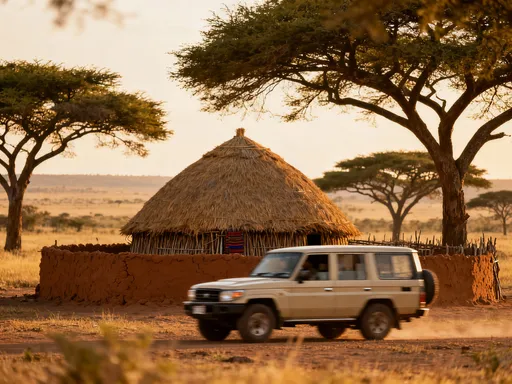
Among the most iconic of these traditional dwellings are the Maasai bomas—circular homesteads constructed by the semi-nomadic Maasai people who have inhabited parts of the Serengeti and adjacent highlands for generations. A typical boma consists of a cluster of small, dome-shaped houses arranged in a ring and enclosed by a thorn fence, known as an enyangwa, which protects against wild animals. The layout is both functional and symbolic: the circular design represents unity and community, while the inward-facing orientation fosters social cohesion and security. Each element—from the placement of sleeping quarters to the central livestock pen—follows ancestral principles passed down orally through generations.
What makes these structures particularly remarkable is their deep integration with the natural world. Rather than imposing on the landscape, bomas blend into it. The materials—primarily mud, cow dung, grass, and timber—are all locally sourced and biodegradable. The homes are designed to breathe, with thick walls that insulate against the heat of the day and the chill of the savannah night. In an environment where temperatures can fluctuate dramatically, such passive thermal regulation is not a luxury but a necessity. These features, refined over centuries, demonstrate a profound understanding of climate-responsive design long before the term became popular in modern architecture.
Self-driving through the region allows travelers to observe these structures at their own pace, often off the main tourist routes. Unlike guided safaris that follow fixed itineraries focused on game viewing, independent travel offers the flexibility to pause, observe, and reflect. A brief detour down a dusty track might lead to a quiet boma where children wave from the entrance, or an elderly woman tends to a fire outside her home. These moments, unscripted and authentic, reveal a side of the Serengeti rarely captured in brochures. The ability to control one’s journey transforms sightseeing into meaningful engagement, turning a wildlife expedition into a cultural pilgrimage.
Encountering Living Culture: The Architecture of the Maasai People
One of the most memorable stops on my self-drive journey was a visit to a Maasai village near the Ngorongoro Conservation Area, where the boundaries between protected wilderness and human habitation are thoughtfully negotiated. As I approached the boma, the scent of woodsmoke and earth filled the air, and the rhythmic hum of conversation blended with the distant call of a hornbill. The community welcomed us with cautious warmth, led by an elder named Lempaka, whose ochre-stained shawl and beaded collar signaled both status and tradition. He explained that their homes, called inkajijik, are built entirely by hand, primarily by women, using a mixture of mud, cow dung, and grass applied in layers over a wooden frame.
The construction process is as much a social ritual as it is a practical endeavor. Each layer must dry before the next is added, often taking several days to complete a single house. The exterior is then smoothed and decorated with geometric patterns—zigzags, spirals, and diamonds—painted in natural pigments. These designs are not merely ornamental; they carry cultural meanings, often reflecting aspects of Maasai cosmology, livestock, or social roles. The roof, made of tightly woven grass, forms a dome that sheds rain efficiently while allowing hot air to rise and escape. Small openings near the top provide ventilation without compromising structural integrity.
Inside, the space is modest but intelligently organized. A typical home is divided into functional zones: one side serves as a sleeping area, usually for the mother and young children, while the other may store food or tools. The husband often sleeps in a separate, smaller structure or near the livestock enclosure, reflecting traditional gender roles and family structure. The central space in the boma, left open, functions as a communal area for cooking, storytelling, and decision-making. Livestock, especially cows, are kept within the enclosure at night, symbolizing their central role in Maasai life—not just as a source of food and wealth, but as a sacred link to identity and ancestry.
As a visitor, I was reminded that respect is paramount when entering such spaces. Photography, while often welcomed, should never be taken for granted. It is customary to ask permission before taking pictures, especially of people or sacred objects. Some families may request a small contribution in exchange for a tour, which directly supports the household. These interactions, when conducted with humility and curiosity, foster mutual understanding. They also highlight the importance of ethical tourism—travel that does not exploit but instead honors the dignity and agency of local communities. The architecture of the Maasai is not a museum exhibit; it is a living tradition, evolving yet rooted in values that prioritize harmony, sustainability, and collective well-being.
Eco-Lodges That Rethink Design: Where Innovation Meets Nature
While traditional structures offer timeless lessons in sustainability, a new generation of architecture is emerging across the Serengeti landscape—eco-lodges that merge indigenous wisdom with modern engineering. These accommodations are not just places to sleep; they are carefully designed experiences that minimize environmental impact while maximizing connection to place. One standout example is a solar-powered camp nestled in a acacia grove near the Seronera Valley, where guest tents are elevated on wooden platforms and oriented to capture cooling breezes. The design draws inspiration from termite mounds, which maintain stable internal temperatures through a system of natural ventilation shafts. By mimicking this biomimetic principle, the lodge achieves passive cooling without relying on energy-intensive air conditioning.
The use of local materials is central to this approach. Stone from nearby quarries forms the foundation, while thatched roofs made from dried grass provide excellent insulation. Reclaimed wood is used for furniture and decking, reducing the need for imported materials and supporting regional economies. Even the lighting is thoughtfully integrated—solar panels discreetly placed on rooftops power LED lights and charging stations, ensuring comfort without compromising ecological integrity. Water conservation is equally prioritized: rainwater harvesting systems collect seasonal downpours, and low-flow fixtures reduce consumption. Waste is managed through composting toilets and recycling programs, ensuring that the lodge leaves little trace on the land.
What makes these eco-lodges particularly accessible to self-drivers is their location along seasonal roads that connect major park entrances. While some are part of larger safari circuits, others are independently operated and require a 4x4 vehicle to reach. The journey itself becomes part of the experience—navigating rugged terrain, spotting herds of zebra along the way, and arriving at a secluded camp where the only sounds are the rustle of grass and the distant call of a hyena. Unlike large commercial lodges, these smaller, owner-run establishments often offer personalized service and deeper cultural engagement, such as guided walks with local naturalists or storytelling sessions under the stars.
For environmentally conscious travelers, staying at such lodges represents a meaningful choice. It supports sustainable tourism models that prioritize conservation and community benefit over mass tourism. Moreover, it allows guests to witness firsthand how architecture can serve as a bridge between tradition and innovation. The lessons learned here—about energy efficiency, material sourcing, and climate adaptation—are not confined to the savannah. They offer valuable insights for building practices worldwide, especially in regions facing similar environmental challenges. In a time of climate uncertainty, the Serengeti’s eco-lodges stand as quiet beacons of what is possible when design listens to nature.
Why Self-Driving Unlocks Deeper Travel Experiences
One of the most liberating aspects of self-driving through the Serengeti is the freedom it offers to explore beyond the well-trodden paths. Guided safaris, while informative and safe, often follow predetermined routes optimized for wildlife viewing during peak hours. In contrast, independent travel allows for spontaneity—stopping at a herder’s temporary shelter, following a dirt trail that leads to a panoramic overlook, or spending extra time at a riverside camp where elephants come to drink at dusk. These unplanned moments often yield the most memorable encounters, not just with animals, but with people and places that reveal the human dimension of the landscape.
During my journey, I had the chance to speak with a young Maasai builder named Naserian, who was repairing a section of her family’s boma using a mixture of traditional techniques and modern materials. She showed me how they now reinforce the mud walls with wire mesh to improve durability, a small but significant adaptation that reflects changing realities. Her openness and pride in her work deepened my appreciation for the resilience of her community. Such conversations are more likely to happen when travelers move at their own pace, unpressured by a schedule. Self-driving fosters a slower, more attentive form of tourism—one that values connection over checklist ticking.
Practical considerations are essential for a successful self-drive adventure. A reliable 4x4 vehicle is non-negotiable, as many roads, especially in the northern and western parts of the Serengeti, are unpaved and can become impassable during the rainy season. GPS devices are helpful, but they should be supplemented with paper maps, as signal coverage can be spotty. Fuel stations are limited, so it’s wise to carry extra reserves, particularly when planning long stretches between towns like Arusha and Seronera. Road conditions vary—some tracks are well-maintained, while others require careful navigation around potholes and erosion gullies. Patience and preparation are key.
Yet the rewards far outweigh the challenges. Self-driving enables travelers to discover architectural gems that lie just off the main routes—abandoned ranger stations repurposed as community centers, small schools built with local stone, or family-run campsites where owners share stories over a shared meal. These experiences cultivate a sense of discovery and respect that is difficult to achieve in more structured tours. By choosing to drive independently, visitors take on a greater responsibility, but they also gain a deeper, more personal understanding of the region’s cultural and environmental fabric.
From Nomadic Roots to Modern Adaptations
The architecture of the Serengeti is not frozen in time; it is a dynamic reflection of changing lifestyles, environmental pressures, and socio-economic shifts. The Maasai, traditionally semi-nomadic pastoralists, have long moved their herds in response to seasonal grazing patterns. Their homes, accordingly, were designed for mobility and quick assembly. However, in recent decades, factors such as land use policies, conservation regulations, and the growth of tourism have influenced a gradual shift toward more permanent settlements. While many families still maintain the boma structure, there is an increasing trend toward fixed compounds with improved durability and modern amenities.
This evolution is evident in the incorporation of new materials. Metal roofs, for instance, are becoming more common, offering better protection against heavy rains and longer lifespans than thatch. Solar panels are increasingly seen on rooftops, providing electricity for lighting, mobile charging, and even small appliances. These changes are not a rejection of tradition, but rather an adaptation to contemporary needs. Younger generations, many of whom attend school and engage with the broader economy, seek comfort and connectivity without entirely abandoning cultural identity. The result is a hybrid architecture—rooted in ancestral forms but responsive to modern life.
Yet this transition is not without tension. Some community leaders express concern that rapid modernization may erode cultural practices and weaken intergenerational knowledge transfer. Others see opportunity in blending old and new—using traditional layouts while improving insulation, or integrating modern sanitation systems without sacrificing communal values. The challenge lies in finding a balance that honors heritage while embracing progress. In this context, architecture becomes a site of negotiation—a physical manifestation of how communities navigate change while preserving what matters most.
Travelers have a role to play in supporting sustainable evolution. By choosing to visit community-run cultural bomas, purchasing handmade crafts, or contributing to local development projects, visitors can help ensure that modernization benefits the people it affects most. Ethical engagement means recognizing that culture is not static, and that change, when led by communities themselves, can be a source of strength rather than loss. The architecture of the Serengeti, in all its evolving forms, reminds us that resilience is not about resisting change, but about adapting with wisdom and dignity.
Design Lessons from the Wild: What the Serengeti Teaches About Sustainable Living
The built environment of the Serengeti offers powerful lessons for sustainable living in the 21st century. At a time when urban centers grapple with energy consumption, waste management, and climate vulnerability, the region’s traditional and eco-conscious structures provide time-tested solutions. Passive cooling, natural insulation, and water conservation are not futuristic concepts here—they are everyday realities. The thick mud walls of a Maasai home, for example, regulate temperature naturally, reducing the need for artificial heating or cooling. The orientation of buildings to capture breezes or avoid direct sun follows principles now celebrated in green architecture, yet they were developed through generations of observation and adaptation.
When compared to typical Western housing, which often relies on high-energy HVAC systems and synthetic materials, the efficiency of Serengeti architecture is striking. A conventional American home may consume thousands of kilowatt-hours annually, while a well-constructed boma requires no electricity at all. This is not to romanticize poverty or suggest that everyone should live without modern comforts, but rather to highlight the value of context-sensitive design. Buildings that respond to local climate, culture, and resources are inherently more sustainable—and often more beautiful—than those that impose standardized solutions.
Travelers can apply these principles in their own lives, even in urban settings. Simple changes—such as improving insulation, using natural ventilation, or incorporating locally sourced materials—can reduce environmental impact and lower energy bills. Rainwater harvesting, composting, and solar energy are increasingly accessible technologies that echo practices seen in the Serengeti. Moreover, the emphasis on community and shared space in traditional design offers a counterpoint to the isolation often found in modern housing. By rethinking how we build and live, we can create homes that are not only efficient but also nurturing and connected.
The broader message is clear: indigenous knowledge holds vital insights for addressing global challenges. In an era of climate crisis, we must look beyond technological fixes and learn from cultures that have lived in balance with nature for centuries. The Serengeti’s architecture is not just a curiosity—it is a model of resilience, simplicity, and harmony. It invites us to slow down, observe, and listen—not only to the land, but to the people who have learned to live with it.
Planning Your Own Architectural Safari: Practical Guide for Travelers
For those inspired to embark on their own architectural safari through the Serengeti, careful planning is essential. The best entry points include Seronera in the central Serengeti, Naabi Hill Gate in the south, and the northern routes near Lobo, each offering access to different cultural and ecological zones. The dry season, from June to October, is ideal for travel, as roads are more passable and wildlife is concentrated around water sources. During this time, visibility is excellent, and the chances of encountering both animals and human settlements are high.
Vehicle preparation is critical. A high-clearance 4x4 with all-terrain tires is recommended, along with spare tires, a recovery kit, and a reliable navigation system. While GPS apps like Gaia or Maps.me can be useful, carrying physical maps from reputable sources such as the Tanzania National Parks (TANAPA) is advisable. Fuel should be topped up before entering remote areas, as stations are scarce. It’s also wise to carry extra water, food, and basic tools, as help may be hours away in case of breakdown.
When visiting communities, always ask permission before entering a boma or taking photographs. Support local economies by purchasing crafts directly from artisans or staying at community-owned camps. Avoid littering and follow Leave No Trace principles to protect both natural and cultural sites. Remember that you are a guest in a living landscape—one shaped by both wildlife and human hands. By traveling with respect and intention, you contribute to a model of tourism that values preservation, dignity, and mutual learning.
Conclusion
The Serengeti isn’t just a stage for the Great Migration—it’s a living gallery of human resilience and creativity. Self-driving through this vast landscape offers more than animal sightings; it opens a dialogue between past and present, nature and design. By slowing down and looking closer, travelers don’t just witness culture—they connect with it. From the hand-built bomas of the Maasai to the innovative eco-lodges inspired by termite mounds, the architecture of the Serengeti tells a story of adaptation, wisdom, and harmony. This is travel transformed: deeper, wiser, and truly unforgettable. In a world that often moves too fast, the Serengeti reminds us that the most enduring designs are those that listen—to the land, to tradition, and to the quiet voice of sustainability.