You Won’t Believe These Fortaleza Viewpoints Are Real
Fortaleza isn’t just golden beaches and warm breezes—its skyline and coast hide some of the most instagram-worthy viewpoints in Brazil. I’m talking spots where the light hits just right, the ocean stretches endlessly, and every photo feels like a postcard. From urban rooftops to quiet dunes, these vantage points redefine what a tropical city can offer. If you're chasing that perfect shot with soul, Fortaleza delivers—no filters needed.
The Magic of Fortaleza’s Light and Landscape
Fortaleza’s visual appeal begins with its extraordinary natural lighting. Nestled on the northeastern coast of Brazil, the city enjoys consistent sunshine throughout the year, with over 300 days of clear skies annually. This abundance of daylight, combined with its coastal geography, creates ideal conditions for stunning photography. The Atlantic Ocean reflects sunlight in shifting shades of turquoise and sapphire, while the fine, pale sands amplify brightness, giving scenes a soft, radiant glow—especially during golden hour. As the sun dips below the horizon, the sky ignites in gradients of coral, amber, and lavender, casting long shadows and warm highlights across the landscape.
Photographers and visual storytellers are drawn to Fortaleza not only for its color palette but for the dynamic contrast between urban energy and natural serenity. Unlike cities where development overwhelms nature, Fortaleza maintains a harmonious balance. Skyscrapers rise near dunes, palm trees sway above seaside promenades, and traditional beach huts sit just steps from modern cafes. This blend enhances visual depth and narrative richness in every frame. The city’s location along the equatorial Atlantic also means humidity levels contribute to a gentle haze in the air, softening distant outlines and adding a dreamlike quality to wide-angle shots.
Moreover, Fortaleza’s position within Brazil’s Northeast region lends it a distinct cultural and environmental identity. It is one of the largest metropolitan areas in the North and Northeast, yet it remains underrepresented in global travel photography—making it a rewarding destination for those seeking original content. The interplay of light, texture, and movement—from rippling waves to fluttering flags—invites both amateur and professional creators to explore. Whether capturing candid moments or staged compositions, the city’s atmosphere supports authenticity, allowing images to feel vibrant yet grounded in real experience.
Praia do Futuro: More Than Just a Beach
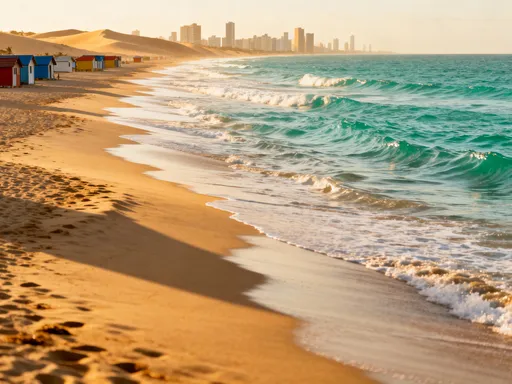
While Praia do Futuro is often celebrated for its inviting waters and lively beach culture, it also stands out as a premier location for scenic photography. This expansive shoreline, stretching several kilometers east of Fortaleza’s city center, offers unobstructed views of the Atlantic and a natural stage for visual storytelling. The beach’s wide, open sands provide a clean, minimalist backdrop, while its gentle waves create rhythmic patterns that enhance composition. What truly sets Praia do Futuro apart, however, are the iconic barracas—colorful beach huts that serve as both cultural landmarks and visual anchors in photographs.
These wooden structures, painted in vibrant hues of blue, yellow, green, and red, dot the coastline like artistic installations. Many are elevated slightly above the sand, offering elevated vantage points from their decks. Restaurants and snack bars operate from these huts, and their upper levels often double as informal observation decks. From here, photographers can capture sweeping panoramas of the ocean meeting the sky, with surfers, families, and kite flyers adding life to the scene. The contrast between the bright huts and the deep blue sea creates a striking visual rhythm, making it a favorite among travel influencers and content creators.
For optimal results, timing is essential. Early morning visits offer soft, diffused light and fewer crowds, ideal for serene, meditative shots. Late afternoon, particularly during golden hour, transforms the beach into a glowing canvas. The low sun casts warm tones across the water and highlights the textures of the sand and wooden structures. To avoid midday harshness, many photographers recommend shooting between 5:30 and 7:00 PM, depending on the season. Additionally, positioning oneself near the northern or southern ends of the beach reduces congestion and increases access to private, uninterrupted views. With a wide-angle lens or even a smartphone in HDR mode, visitors can capture Fortaleza’s coastal charm in its most authentic form.
Avenida Beira-Mar: The Urban Waterfront Frame
Avenida Beira-Mar is more than a scenic drive—it’s a living gallery where city life unfolds against a constant ocean backdrop. This beautifully landscaped avenue traces the coastline of Fortaleza, connecting neighborhoods like Meireles and Praia de Iracema with a continuous stretch of walkways, cycle paths, and public seating. Designed with both locals and visitors in mind, the avenue integrates nature, art, and urban rhythm into a single visual narrative. For photographers, it offers a structured yet dynamic environment where movement, color, and light converge in compelling ways.
One of the most photographed sections lies near the Praia de Iracema cliffside, where the road curves gently above the crashing waves. Here, the contrast between the rugged rock formations and the calm cityscape behind creates depth and drama. Public art installations, including murals and sculptural benches, add cultural context and visual interest. At sunset, the entire avenue glows under warm light, with the sky reflecting off glass-fronted buildings and the sea shimmering in the foreground. This interplay of natural and architectural elements makes it a prime location for capturing the essence of coastal urban life.
Photographers often use the cycling and jogging paths to introduce motion into their shots. A silhouette of a cyclist against the twilight sky, or a jogger framed by palm trees, adds human scale and narrative energy. Kitesurfers launching from nearby beaches can also be included in wide compositions, their colorful sails contrasting against the blue expanse. For those using drones (where permitted), the aerial view of Avenida Beira-Mar reveals its elegant curve along the coast, flanked by greenery and dotted with people enjoying the evening breeze. Even without special equipment, a simple smartphone can produce powerful images by focusing on reflections in puddles, patterns in the pavement, or the way streetlights begin to glow as daylight fades.
To make the most of this location, visitors should plan their visit around sunset. Arriving 45 minutes before dusk allows time to scout the best angles and secure a clear line of sight. The area is popular with locals, so arriving early ensures space on benches or low walls ideal for tripod use. Noise levels remain low, creating a peaceful atmosphere conducive to mindfulness and creativity. Whether shooting wide landscapes or intimate details, Avenida Beira-Mar offers a balanced blend of accessibility and aesthetic richness.
Mirante do Morro Branco: A Hidden Elevated Gem
Tucked within the dune systems near Cumbuco, approximately 35 kilometers northwest of Fortaleza, lies the Mirante do Morro Branco—a lesser-known but profoundly beautiful viewpoint that rewards those willing to venture off the beaten path. This natural elevation, formed by wind-carved sand dunes, rises above the coastline and provides uninterrupted panoramic views of the Atlantic and the surrounding desert-like landscape. From the summit, the ocean stretches endlessly, meeting the horizon in a seamless line, while the undulating dunes below create a surreal, almost Martian terrain. The contrast between the golden sands and the turquoise water is so vivid it feels unreal—yet entirely authentic.
The visual drama of Mirante do Morro Branco lies in its juxtaposition of extremes. On one side, the arid dunes shift with the wind, their ridges sculpted into soft waves frozen in time. On the other, the ocean crashes against the shore with constant motion and cool clarity. This duality makes the site a favorite among photographers seeking contrast, texture, and scale. The high vantage point allows for wide-angle compositions that capture both elements in a single frame, emphasizing the raw beauty of nature’s design. During sunrise and late afternoon, the low-angle light enhances shadows and highlights, giving the dunes a three-dimensional quality that elevates any image.
Access to the viewpoint is best achieved with the help of a local guide, especially for first-time visitors. The terrain can be challenging, with loose sand and steep inclines requiring careful footing. Guides not only ensure safety but also know the optimal paths and hidden angles that maximize photographic potential. Many offer small off-road vehicles or dune buggies as part of guided tours, making the journey part of the adventure. These excursions often include stops at nearby lagoons or quiet beaches, expanding the visual repertoire available to travelers.
For photography, mid-morning and late afternoon are ideal. Midday sun can be too harsh, washing out colors and creating deep, unflattering shadows. In contrast, late afternoon light bathes the dunes in warm gold, while morning visits offer cooler tones and calmer winds—perfect for capturing stillness. Because the area is less frequented than central Fortaleza beaches, crowds are minimal, allowing for peaceful, uninterrupted sessions. A polarizing filter can help manage glare from the sand and water, while a telephoto lens can isolate distant surfers or birds in flight. Even without advanced gear, the natural beauty of Mirante do Morro Branco ensures compelling results.
Cascata Waterfall & Ecopark: Nature’s Own Studio
Just outside Fortaleza, the Cascata Waterfall and its surrounding Ecopark offer a lush, controlled environment perfect for nature-inspired photography. Unlike wild, remote waterfalls, this site is thoughtfully designed to balance accessibility with ecological preservation. The centerpiece—a man-made waterfall fed by a natural spring—flows gently down a rocky slope into a clear pool, surrounded by dense Atlantic Forest vegetation. Towering trees, hanging vines, and tropical ferns create a green canopy that filters sunlight into dappled patterns, giving the space an enchanted, almost cinematic quality. This intentional design makes the ecopark a reliable destination for high-quality imagery regardless of season.
Because the waterfall is maintained within a protected park, conditions remain consistent year-round. Rainfall doesn’t disrupt access, and water flow is regulated to ensure visual appeal. This reliability is a major advantage for content creators on tight schedules or those seeking specific moods—whether serene reflections, dynamic water movement, or vibrant greenery. The surrounding trails wind through shaded groves and open clearings, offering varied backdrops within a compact area. Benches, wooden bridges, and stone pathways are strategically placed to encourage contemplation and provide natural framing for photographs.
One of the most effective techniques here is using the pool’s surface to capture reflections. A still morning, shortly after the park opens, offers the best conditions. The water acts like a mirror, doubling the image of the waterfall and surrounding foliage, creating symmetrical compositions that feel both balanced and magical. A tripod or smartphone stabilizer helps achieve sharp results, especially in lower light under the canopy. Photographers also use the contrast between light and shadow to build depth—bright patches of sunlight breaking through leaves can highlight a single flower or a textured rock face.
Visitors are advised to arrive early, ideally between 7:00 and 8:30 AM, to avoid crowds and benefit from soft lighting. By mid-morning, families and tour groups begin to arrive, increasing noise and movement. The park enforces rules to protect the environment—no swimming in the main pool, no littering, and restricted drone use—ensuring the space remains pristine. These guidelines also contribute to a respectful, mindful atmosphere, encouraging visitors to observe and appreciate rather than disrupt. For those seeking authenticity without unpredictability, Cascata Ecopark delivers a harmonious blend of nature and design.
Rooftop Culture in Fortaleza’s Heart
In recent years, Fortaleza has embraced a growing rooftop culture, particularly in upscale neighborhoods like Aldeota and Meireles. Hotels, restaurants, and private clubs have transformed their upper levels into stylish observation decks, offering 360-degree views of the city and sea. These spaces blend comfort with panoramic beauty, providing an elevated perspective—literally and figuratively—on urban coastal life. While not as internationally known as rooftop scenes in São Paulo or Rio, Fortaleza’s versions offer a more intimate, relaxed experience, perfect for capturing atmospheric, moody content.
The most compelling rooftops combine modern design with open-air layouts, featuring lounge seating, ambient lighting, and unobstructed sightlines. From these heights, the city reveals its layered texture: residential buildings with red-tiled roofs, glass towers reflecting the sky, and the endless blue of the Atlantic in the distance. At twilight, the transition from daylight to city lights creates a magical window for photography. The sky retains its warm hues while streetlights, car trails, and building windows begin to glow, forming a tapestry of artificial and natural illumination. This interplay is especially effective when captured with a slight long exposure, turning moving headlights into soft streaks of light.
Evening visits are strongly recommended. As temperatures cool and the day’s energy settles, these rooftops come alive with soft music, conversation, and the clink of glasses. The atmosphere is social yet unhurried, allowing photographers to move freely and compose shots without pressure. Some venues offer signature cocktails or small bites, enhancing the sensory experience. While specific rooftop names may vary in availability, the experience remains consistent across well-maintained establishments: a sophisticated vantage point where urban life meets coastal serenity.
For best results, photographers should use a wide aperture to capture both foreground details and distant lights. A tripod is useful for low-light stability, though many modern smartphones perform well in night mode. The key is patience—waiting for the perfect moment when a kite surfer passes in the distance, or when a group laughs under string lights, adding human warmth to the scene. These rooftops are not just about views; they are about capturing the mood of a city that knows how to unwind with grace.
Why These Viewpoints Tell a Deeper Story
Beyond their visual appeal, Fortaleza’s most striking viewpoints offer a window into the city’s soul. Each location—whether a bustling beach, a quiet dune, or a curated garden—reflects a harmony between nature, culture, and daily life. The golden light isn’t just a photographic advantage; it’s a constant presence in the lives of locals who walk the shores, fish from the rocks, or gather at sunset. The colorful barracas are not merely scenic—they are community hubs where generations share meals and stories. The dunes and forests are not just backdrops; they are protected spaces that speak to environmental awareness and regional pride.
When travelers seek out these viewpoints, they’re not just chasing likes or perfect images. They’re engaging with a place that values beauty, balance, and authenticity. Fortaleza resists the temptation to overdevelop or overcommercialize its natural assets. Instead, it invites visitors to slow down, observe, and connect. A photo taken here carries more than aesthetic value—it holds a moment of stillness, a breath of sea air, a memory of light dancing on water.
This is why the most powerful images from Fortaleza are not the most technically perfect, but the ones that capture feeling. A child running toward the waves at Praia do Futuro. A couple sharing a drink as city lights flicker on. A lone figure silhouetted against the dunes at Mirante do Morro Branco. These moments remind us that travel photography, at its best, is storytelling. It’s about preserving not just what we see, but what we feel.
As you explore Fortaleza’s viewpoints, let curiosity guide you beyond the obvious angles. Step off the main path, arrive early, stay late, and allow the city to reveal itself in quiet details. Engage respectfully with the environment, follow local guidelines, and support sustainable tourism practices. In doing so, your images will not only be beautiful—they will be meaningful. Fortaleza’s landscapes are real, unfiltered, and deeply alive. And when captured with intention, they become more than pictures. They become invitations—to wonder, to wander, and to return.