You Won’t Believe What I Found at Suva’s Festival Scene
If you think Fiji is just beaches and resorts, think again. I went to Suva expecting politics and city life — but got pulled into a whirlwind of color, rhythm, and tradition during its vibrant festival season. From drumbeats shaking the streets to markets bursting with handmade crafts and spicy *kakoda*, this capital surprised me at every turn. It’s not just a stopover; it’s a cultural heartbeat waiting to be felt. The scent of frangipani mingles with woodsmoke and sizzling curry, while children in floral garlands wave flags beside elders in woven mats. This is Fiji not as a postcard, but as a living, breathing community — one that invites visitors not to watch, but to participate, to listen, and to remember.
Arrival in Suva: First Impressions Beyond the Postcard Fiji
Suva greets travelers with a rhythm unlike any other Fijian destination. Unlike the soft lull of island resorts where palm trees sway over turquoise waters, Suva hums with the energy of a city alive in motion. Tall mango trees line wide avenues, their branches arching over colonial-era buildings painted in faded ochre, seafoam green, and sun-bleached white. The air carries a mix of diesel, ripe mango, and the faint tang of the ocean just beyond the waterfront. Traffic moves in a relaxed but persistent flow, with minibuses painted in bold colors announcing routes in looping cursive.
At first glance, Suva may seem unpolished compared to the glossy image of Fiji often seen in travel brochures. But that’s precisely where its authenticity begins. This is not a destination curated for sunbathers and snorkelers — though it welcomes them — but a thriving capital where culture is lived daily, not staged for guests. The streets reflect Fiji’s rich diversity: Fijian, Indo-Fijian, Chinese, and European influences blend in architecture, language, and dress. Women in sulus adorned with traditional patterns walk beside men in formal shirts, while Hindi film music drifts from open storefronts.
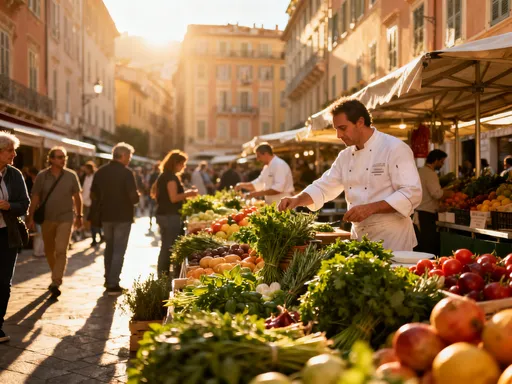
What makes Suva remarkable is how seamlessly its urban landscape becomes a stage for cultural expression. Government buildings stand across from bustling markets where vendors sell handmade fans, woven baskets, and bundles of kava root. The University of the South Pacific adds youthful energy, with students in crisp white shirts discussing climate policy and indigenous rights. But when festival season arrives, the city transforms entirely. Streets that once echoed with daily commerce now vibrate with drumming, dance, and celebration. It’s during these moments that Suva reveals its true soul — not as a contrast to island paradise, but as its beating heart.
The Heartbeat of the City: Experiencing the Hibiscus Festival
The Hibiscus Festival is Suva’s most anticipated annual event, a ten-day celebration that turns the city into a living canvas of music, art, and community pride. Held each September, it began in the 1950s as a way to boost morale and civic spirit, and today it stands as a testament to Fijian resilience and joy. The festival’s namesake, the hibiscus flower, blooms in vibrant reds, pinks, and yellows throughout the city, adorning floats, costumes, and even woven into hairpieces worn by schoolchildren.
At the heart of the festival is the Grand Parade, a spectacle that draws thousands to the streets of central Suva. Marching bands in crisp uniforms play lively tunes as community groups, dance troupes, and local businesses showcase their creativity on elaborately decorated floats. Some depict scenes from Fijian mythology, while others celebrate agricultural abundance or environmental awareness. The energy is infectious — children dance alongside performers, and elders wave from shaded sidewalks, their faces lit with nostalgia and pride.
Beyond the parade, the festival offers a wide array of events that engage residents and visitors alike. There are beauty pageants that emphasize grace and cultural knowledge, not just appearance; talent shows where young singers perform in Fijian, Hindi, and English; and agricultural fairs displaying the best of Fiji’s crops, from taro to dalo and sweet pineapples. What sets the Hibiscus Festival apart is its grassroots nature — it’s organized largely by volunteers and funded through local sponsorships, making it a true reflection of community effort.
For travelers, attending the Hibiscus Festival offers a rare opportunity to witness Fijian identity in its full complexity. It’s not a performance for tourists, but a celebration by Fijians, for Fijians — one that generously opens its doors to respectful guests. The festival embodies the Fijian value of *veilomani*, or hospitality, where sharing joy is as important as experiencing it. To walk through these streets during the festival is to understand that Suva is not just a capital city, but a living culture in motion.
Dancing Through Cultures: Where Tradition Meets Celebration
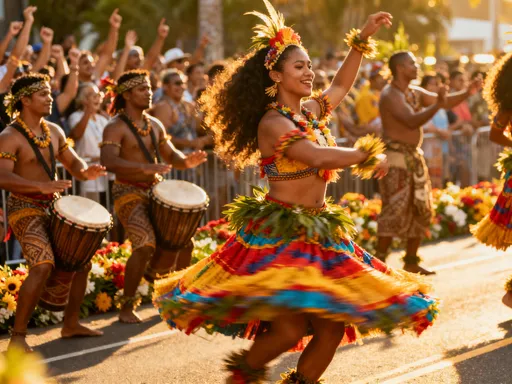
No festival in Suva is complete without the *meke*, a traditional Fijian dance that combines storytelling, rhythm, and movement. Performed in vibrant costumes of coconut fiber, shells, and natural dyes, the *meke* is more than entertainment — it is history in motion. Dancers move in synchronized waves, their gestures narrating legends of war, love, and ancestral journeys. The drumming, led by large wooden *lali* drums, sets a pulse that resonates through the ground, drawing even reluctant onlookers into its rhythm.
During the Hibiscus Festival, *meke* performances take place in parks, school grounds, and community centers, often accompanied by chants in the Fijian language. What’s remarkable is the intergenerational participation — elders teach the movements to children, ensuring that these traditions are not lost. Visitors are sometimes invited to join in, especially during informal sessions where drumming circles form spontaneously. These moments are not staged; they arise naturally from the joy of the occasion, offering a genuine connection to Fijian culture.
Another awe-inspiring tradition seen during festival season is firewalking, a practice rooted in the Beqa Island community but often showcased in Suva as a symbol of Fijian spiritual strength. Though the actual firewalk is a sacred ritual reserved for initiated members of the Sawau tribe, demonstrations and cultural talks help visitors understand its significance. The courage required to walk barefoot over red-hot stones is a powerful metaphor for endurance and faith, values deeply embedded in Fijian society.
For those eager to engage more deeply, several cultural centers and community groups offer short workshops during the festival. These include basic *meke* dance lessons, drumming sessions, and even weaving demonstrations using pandanus leaves. These activities are not tourist attractions in the commercial sense — they are acts of cultural sharing, led by locals who take pride in their heritage. Participating in one of these workshops is not just about learning a skill; it’s about building mutual respect and understanding.
Taste the Festivity: Food Stalls and Flavors That Tell Stories
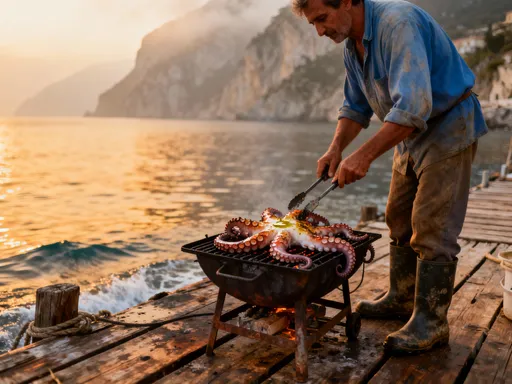
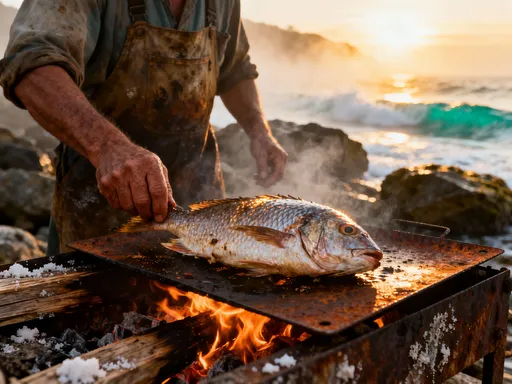
If the *meke* is the soul of the festival, then the food is its heartbeat. Suva’s festival season is a feast for the senses, with food stalls lining the streets and filling the air with smoky, spicy, and sweet aromas. The most iconic dish is the *lovo*, a traditional Fijian earth oven meal where meat, fish, and root vegetables are wrapped in banana leaves and slow-cooked over hot stones. The result is tender, smoky, and deeply flavorful — a dish often reserved for special occasions and communal gatherings.
At festival grounds, families and community groups prepare *lovo* in large pits, uncovering the feast at ceremonial moments that draw crowds. Eating from a *lovo* is not a solitary act; it is a shared experience, reinforcing the Fijian value of community, or *vanua*. Alongside it, visitors can sample *rourou*, a creamy dish made from taro leaves cooked in coconut milk, and *dalo*, a starchy root vegetable that serves as a staple across the islands. These foods are not just sustenance — they are links to the land and ancestral practices.
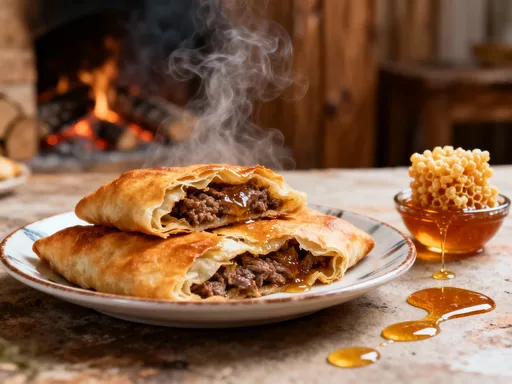
The culinary landscape of Suva’s festivals also reflects its Indo-Fijian heritage, which traces back to 19th-century laborers brought to work on sugar plantations. Their influence is evident in the vibrant array of curries, chutneys, and flatbreads available at festival stalls. Spicy *achar* (pickles), golden *samosas*, and sweet *kuih* — small steamed or fried cakes flavored with coconut and cardamom — offer a delightful contrast to traditional Fijian fare. The blending of flavors mirrors the blending of cultures, creating a cuisine that is uniquely Fijian.
Drinks play an essential role as well. Fresh coconut water, served straight from the shell, is a refreshing staple. For those seeking something more ceremonial, *kava* is available at designated areas. Made from the ground root of the kava plant, this earthy, slightly numbing drink is central to Fijian social and spiritual life. Sharing a bowl of kava is a gesture of respect and unity, often accompanied by quiet conversation and mutual listening. To drink kava during the festival is to participate in a tradition that has bonded Fijians for generations.
Off the Beaten Path: Hidden Festival Moments Only Locals Know
Beyond the grand parades and official events, some of the most meaningful festival experiences happen quietly, away from the spotlight. Early in the morning, before the city fully wakes, church bells ring across Suva as congregations gather for special services. These are not tourist attractions, but deeply spiritual moments where hymns in Fijian and Hindi rise through open doors, welcoming all who approach with reverence. Attending one of these services, even as a silent observer, offers a glimpse into the faith that anchors much of Fijian life.
Schools also play a vital role in the festival season, hosting pageants and performances that showcase the talents of young Fijians. These events are often held in modest halls or outdoor courtyards, filled with proud parents and teachers. Children recite poetry, sing folk songs, and perform dances that honor both Fijian and Indo-Fijian traditions. These gatherings are not polished productions — they are heartfelt expressions of identity and pride, where every child’s effort is met with warm applause.
Wandering through Suva’s side streets during the festival can lead to unexpected discoveries. Around a quiet corner, a group of teenagers might be practicing dance moves for the next day’s competition. In a small park, elders gather to play *bocci*, a game introduced during colonial times but now fully embraced as part of local leisure. At a roadside stall, a grandmother sells handmade *kiko* — small woven bracelets — while humming a traditional lullaby. These moments are not listed in guidebooks, but they are the essence of Suva’s festival spirit.
For travelers, the key to experiencing these hidden moments is respect. Observing quietly, asking permission before taking photos, and dressing modestly go a long way in building trust. A simple “Bula” — the Fijian greeting — spoken with a smile can open doors. The festival is not a performance for outsiders, but a celebration of community. When visitors approach with humility and curiosity, they are often welcomed not as spectators, but as guests.
Planning Your Trip: When to Go, Where to Stay, and What to Bring
To experience Suva at its most vibrant, plan your visit for September, when the Hibiscus Festival takes place. This period falls at the end of the dry season, offering pleasant temperatures and lower humidity. While accommodations in Suva may not match the luxury of island resorts, they provide comfort, convenience, and cultural immersion. The Grand Pacific Hotel, a historic landmark in the city center, offers colonial charm and easy access to festival events. For a more modern stay, several mid-range hotels and guesthouses are located near Victoria Parade and the Botanical Gardens, putting you within walking distance of key festivities.
Getting around Suva is straightforward, though patience is advised. Local minibuses, known as “taxis,” are the most common form of public transport and cover most major routes. Fares are low, and drivers are generally friendly, though schedules can be flexible. For greater convenience, ride-hailing apps and private drivers are increasingly available. Walking is feasible in the central areas, especially during festival week when streets are closed to traffic for events. Comfortable footwear is essential, as sidewalks can be uneven and the tropical sun intense.
Packing for Suva’s festival season requires thoughtful preparation. Lightweight, breathable clothing is ideal, but modest attire is recommended, especially when visiting cultural or religious sites. Women may want to bring skirts or dresses that cover the knees, and men should have shirts with sleeves. A light rain jacket or compact umbrella is wise, as afternoon showers are common even in the dry season. Sun protection — hat, sunglasses, and reef-safe sunscreen — is essential. A reusable water bottle helps reduce plastic waste, and a small bag for carrying handmade crafts or souvenirs is practical.
It’s also wise to carry some cash, as not all vendors accept cards, especially at outdoor markets and food stalls. Learning a few basic Fijian phrases, such as “Bula” (hello), “Vinaka” (thank you), and “Moce” (goodbye), shows respect and often leads to warmer interactions. Above all, come with an open mind — Suva’s magic lies not in perfection, but in its authenticity, warmth, and the generosity of its people.
Why Suva’s Festivals Matter: More Than Just a Party
Suva’s festivals are not merely celebrations — they are acts of cultural preservation and community resilience. In a world where globalization often erases local identities, these events serve as vital anchors, reminding Fijians of who they are and where they come from. The *meke*, the *lovo*, the kava ceremony — these are not relics of the past, but living traditions passed from one generation to the next. The festival season strengthens intergenerational bonds, as elders teach children the steps, songs, and stories that define their heritage.
These celebrations also foster unity in a multicultural society. Fijians, Indo-Fijians, and other communities come together not to erase their differences, but to honor them. A child in a sulu dances beside one in a kurta; a Fijian choir sings alongside an Indian classical musician. This coexistence is not always easy, but the festival provides a space where shared joy transcends division. It is a model of harmony built not on uniformity, but on mutual respect.
For visitors, participating in Suva’s festivals is an opportunity to move beyond the typical tourist experience. It invites a deeper form of travel — one rooted in connection, curiosity, and humility. When you eat from a *lovo*, learn a dance step, or share a bowl of kava, you are not just observing culture; you are engaging with it. This kind of travel fosters understanding, breaks down stereotypes, and creates lasting memories.
Responsible tourism means approaching these moments with care. It means listening more than speaking, observing before participating, and always asking permission. It means supporting local vendors, respecting sacred spaces, and leaving no trace. When done with intention, travel to Suva during festival season becomes more than a vacation — it becomes a bridge between worlds.
Suva doesn’t glitter like a postcard, but it pulses with something deeper — a living culture that opens its arms during festival season. My trip taught me that real connection comes not from perfect sunsets, but from shared drumbeats, unfamiliar flavors, and faces lit with pride. If you let go of expectations, Suva will surprise you. And maybe, just maybe, change the way you see Fiji forever.